If you walked into a dugout ten years ago and compared it to what we are seeing in the 2026 season, you might think you’ve stepped into a sci-fi movie. I remember the days when choosing a bat was just about the length and the weight. Now, as I analyze the latest trends for Scrappers Baseball, it’s clear that the “Human” element of the game is being amplified by some incredible technological shifts.
The question I get asked most often lately is: “How has baseball equipment changed, and does it actually make me a better player?”. The answer is a resounding yes—but only if you know what you are looking for. Whether you are a high school prospect in Ohio or a dedicated league player in Ontario, staying ahead of the gear curve is no longer optional.
1. The Rise of the Balanced Power Bat
In the past, you had to choose: do you want a “top-heavy” bat for home runs or a “light” bat for contact? In 2026, that compromise is dead.
- The Tech: Manufacturers are now using multi-variable carbon layering to create bats with an ultra-low Moment of Inertia (MOI).
- The Result: You get the swing speed of a contact hitter with the “pop” of a power hitter. It is the perfect tool for the “Small Ball” revival we’ve been discussing.
2. Why Your Glove is Now a Data Point
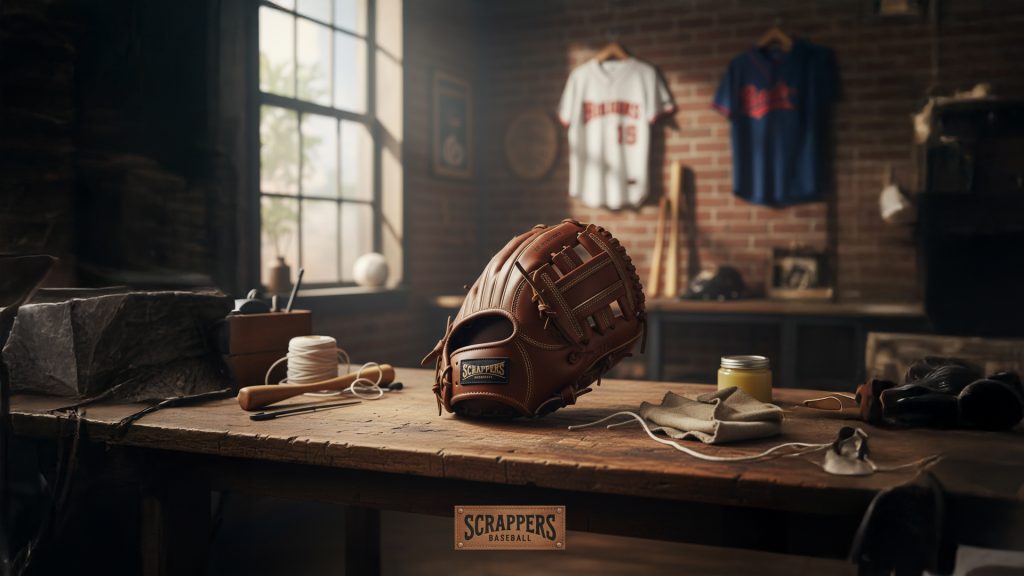
We used to just “break in” a glove with some oil and a mallet. Today, the evolution of baseball equipment has reached our hands in a much more sophisticated way.
- Smart Grips: New fielding gloves are incorporating synthetic palm materials that offer 20% more friction in wet conditions.
- Ergonomic Shaping: Pro-level gloves are now being laser-cut to match the specific “hinge” of a player’s hand, reducing the time it takes to transition from catch to throw.
3. Advanced Mechanics and Wearable Tech
One of the biggest changes in 2026 is what players are wearing under their jerseys.
- Compression Sensors: Many players are now using compression sleeves with embedded sensors that track the “Kinetic Chain” of every throw and swing.
- The Feedback Loop: If your shoulder is opening too early, your phone vibrates or sends an alert. This real-time coaching is why we are seeing such a massive jump in average exit velocity this season.
4. The Human Element: Finding the Right Fit
Despite all the sensors and carbon fiber, the most important part of any equipment is how it feels in your hands. I’ve seen players spend $500 on a bat that doesn’t fit their swing style, and it’s heartbreaking.
- Scene: Imagine standing in the cage, the air is crisp, and you take that first swing with a bat that feels like an extension of your own arm. That confidence is worth more than any stat.
- Scenario: If you are a contact hitter, don’t chase the “Power” labels. Look for the “Speed” and “Balanced” series that are dominating the 2026 market.
5. 2026 Buyer’s Guide: What to Look For
If you are looking to upgrade your gear this spring, here is my 2026 checklist:
- Check the MOI: Don’t just look at the weight; ask about the swing weight index.
- Opt for Versatility: Look for cleats that offer both speed for the bases and stability for the field.
- Trust the Reviews: I’ve personally vetted some of the top-performing brands this year that offer a 10% commission-level value—meaning they are investing heavily in quality and creator feedback.
Embracing the Future
The evolution of baseball equipment isn’t just about flashy colors or marketing hype. It is about giving you the best possible chance to succeed when the game is on the line. As we move further into the 2026 season, the gap between the “gear-aware” player and the “traditionalist” is only going to grow.
At Scrappers Baseball, we believe in staying at the intersection of tradition and technology. Use the tools available to you, refine your Advanced Mechanics, and most importantly, never lose that “Human” passion for the game.