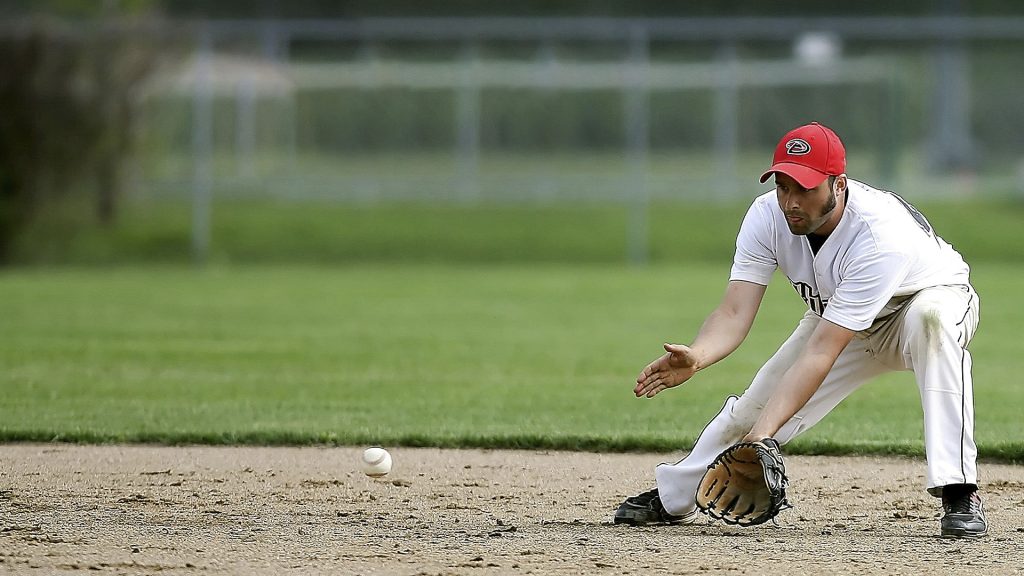
Every baseball player knows that quick feet can change everything. Whether you’re stealing a base, chasing a line drive, or charging a bunt, agility separates good players from great ones. But agility isn’t just about raw speed — it’s about control, reaction, and rhythm.
When you watch elite infielders move, it’s like a dance: balanced, fluid, and explosive in every direction. And that’s exactly what these drills are designed to build — sharper reaction times, smoother transitions, and faster footwork that feels effortless under pressure.
Let’s dig into the drills and principles that actually make a difference on the diamond.
1. The Cone Shuffle Drill: Building Controlled Speed
One of the simplest yet most effective ways to sharpen agility is the cone shuffle drill. It’s not flashy, but it mimics the exact side-to-side movements you make fielding ground balls or adjusting to base runners.
Setup:
Place five cones in a straight line, about three feet apart.
How to do it:
Start in an athletic stance at the middle cone. Shuffle quickly toward one end cone, touch it, then shuffle back across to the other side. Focus on maintaining low hips, quick steps, and balanced posture.
Pro Tip:
Keep your upper body still and eyes forward — the less bounce in your movement, the more control you gain. Start slow, then push your pace as you improve.
2. Ladder Drills: Precision Over Power
The agility ladder is one of the most underrated baseball tools. It doesn’t just improve foot speed; it fine-tunes coordination, timing, and muscle memory — critical for smooth transitions between fielding and throwing.
Try variations like:
- In-and-Out Steps: Focus on rhythm and staying light on your toes.
- Lateral Shuffle: Mimics double-play pivots or quick direction changes.
- Ickey Shuffle: Builds flow and body control under pressure.
Spend five to ten minutes on ladder drills during warm-ups. Over time, you’ll feel quicker and more confident reacting to unpredictable plays.
Real-world example:
Many college infield coaches have their players start every session with ladders. Why? It activates the brain-muscle connection — your mind starts anticipating movement faster than your body can, and eventually, the two sync perfectly.
3. Reaction Ball Drill: Train Your Reflexes
Ever seen those small, bouncy, six-sided balls? That’s your secret weapon for reaction speed.
How it works:
Drop a reaction ball from shoulder height and try to catch it after the first bounce. The ball’s unpredictable path forces your body to adapt instantly — just like reacting to a grounder with a bad hop.
For infielders, it’s gold. For outfielders, it trains explosive first steps. You can even do it solo against a wall or with a teammate for a competitive edge.
Pro Tip:
Alternate between your left and right hands to balance your coordination. You’ll start noticing smoother glove transitions during real plays.
4. Base Path Sprint and Turn Drill: Game-Speed Movement
Agility isn’t just about the feet — it’s about game context.
This drill mimics the exact motion of sprinting out of the batter’s box, rounding first, and preparing for a quick second-base decision.
Setup:
Place cones along the first and second base paths.
How to do it:
Sprint hard out of a “batting stance,” round first at a controlled lean, then either continue to second or break back toward first. The focus is on controlled acceleration and deceleration — the moment where quickness meets decision-making.
Why it works:
Most base-running mistakes happen not because of speed, but because players can’t adjust mid-sprint. This drill teaches your body to maintain control without losing explosiveness.
5. The Triangle Drill: Multi-Directional Explosiveness
This one builds elite-level reaction time.
Set up three cones in a triangle, about five feet apart. Start at one cone, then sprint, shuffle, and backpedal between the points following a random call or visual cue (you can have a coach or teammate point).
It’s unpredictable — and that’s the point. You’re training your body to react instantly, no matter the direction.
Humanized insight:
When I first ran this drill in high school, I used to overthink every move — “left or right, shuffle or sprint?” But the more I did it, the more my body started reacting before I even processed it. That’s when I realized: agility isn’t thinking fast; it’s not thinking at all.
6. Single-Leg Balance Catch: Stability Meets Reaction
Balance is often overlooked in agility training. You can’t move fast if you can’t stay grounded.
Here’s a simple drill:
Stand on one leg, toss a baseball against a wall, and catch it — maintaining your balance the entire time. Alternate legs.
It looks easy until fatigue hits, but this builds incredible ankle strength and body control. Those small stabilizer muscles are what let you adjust mid-dive or stay upright after an off-balance throw.
7. Resistance Band Shuffle: Building Explosive Power
Once you’ve mastered body control and rhythm, it’s time to add resistance. Resistance bands amplify every small movement — making your muscles fire faster and stronger.
How to do it:
Attach a resistance band around your thighs or hips, get into your fielding stance, and perform quick lateral shuffles. Move 3–4 steps each way, staying low and controlled.
Why it works:
This adds tension to your fast-twitch muscle fibers, helping you explode out of your stance with more power. You’ll feel lighter and faster once the band comes off — almost like swinging a bat after warming up with a weighted one.
Pro Tip:
Focus on short bursts. Agility is about quick acceleration, not long-distance endurance.
8. Partner Mirror Drill: Real-Game Reaction Speed
Baseball is unpredictable — grounders skip, runners fake, and coaches yell last-second commands. The mirror drillsimulates that chaos.
Setup:
Face your partner in an athletic stance, about 5 feet apart. One person is the “leader,” the other the “mirror.” The leader moves side to side, forward, or backward — and the mirror has to react instantly, staying locked in.
Why it matters:
It’s pure reaction training. No cones, no routine — just body awareness and focus. This drill teaches players to process motion visually, a skill that transfers directly to live gameplay.
Coach’s insight:
Many college-level coaches use this as a pre-practice warm-up to sharpen reaction times. It’s also great for team chemistry — players learn to “read” each other intuitively, just like they do in a real game.
9. Agility Circuit: The Complete Package
When you’re ready for a full challenge, build a mini circuit that combines cones, ladders, and reaction work.
Here’s a simple setup:
- Ladder in-and-outs (10 seconds)
- Cone shuffles (10 seconds)
- Sprint to a reaction ball catch (10 seconds)
- Jog back and repeat 3 rounds
This 90-second routine hits every major agility element — speed, balance, direction, and reflexes — under fatigue.
Pro Tip:
Record your rounds. Track improvement weekly. Even a half-second faster transition is massive progress in baseball terms.
Translating Drills to Game Situations
You might wonder: “How do I actually see this on the field?”
Here’s how each type of drill connects:
- Cone & Ladder Drills → Quicker pivots and smoother double plays.
- Reaction Ball & Mirror Drills → Faster reads on grounders and bunts.
- Base Path Sprints → Sharper base turns and smarter slide timing.
- Single-Leg & Band Work → Better body control when throwing off-balance.
These aren’t just workouts — they’re performance builders. The difference shows up when you get that extra half-step on a stolen base or field a short hop cleanly under pressure.
Every player has that one memory — the moment they almost made the play. Maybe it was a grounder just beyond reach or a tag you missed by an inch. Those moments stay with you.
That’s where agility comes in. You’re not just training to move faster; you’re training to rewrite those moments. The next time the same play happens, you’re there — glove down, perfect footwork, out recorded.
That’s what this work is about. Not just drills, but redemption through precision.
FAQs
Q1: How often should I do agility training for baseball?
2–3 times per week is ideal. Mix it into warm-ups or off-day conditioning. Consistency is key — 15 focused minutes beat 1 long weekly session.
Q2: Do these drills replace weight training or running?
No — they complement them. Agility drills train fast-twitch muscle response, while weight training builds strength and stability.
Q3: How long before I’ll notice results?
Usually within 3–4 weeks. Players often report feeling “lighter” and more explosive within the first few sessions.
Q4: Should pitchers or catchers do agility training too?
Absolutely. Quickness off the mound or behind the plate can prevent runs and improve control of the game’s tempo.